It's no secret that fashion houses invest a lot of effort in increasing their brand's visibility and maintaining its high reputation. Therefore, it's not surprising that they want to protect themselves from any actions that could damage their brand's reputation.
Despite the fact that various fashion houses' products are often mentioned in works of art in a highly unfavorable light, they are hesitant to take legal action against the artists. This could be due to their belief that any publicity is good publicity, or it could be a result of their uncertainty about the outcome and their reluctance to engage in a losing battle. We will try to understand why companies often prefer to accept negative references to their products in works of art instead of defending their interests in court.
The Plesner v. Louis Vuitton Case
A notable example of how a fashion house's products mentioned in an artwork became the subject of a dispute is the conflict between Dutch-Danish artist Nadia Plesner and Louis Vuitton (the Plesner v. Louis Vuitton case, 2011).
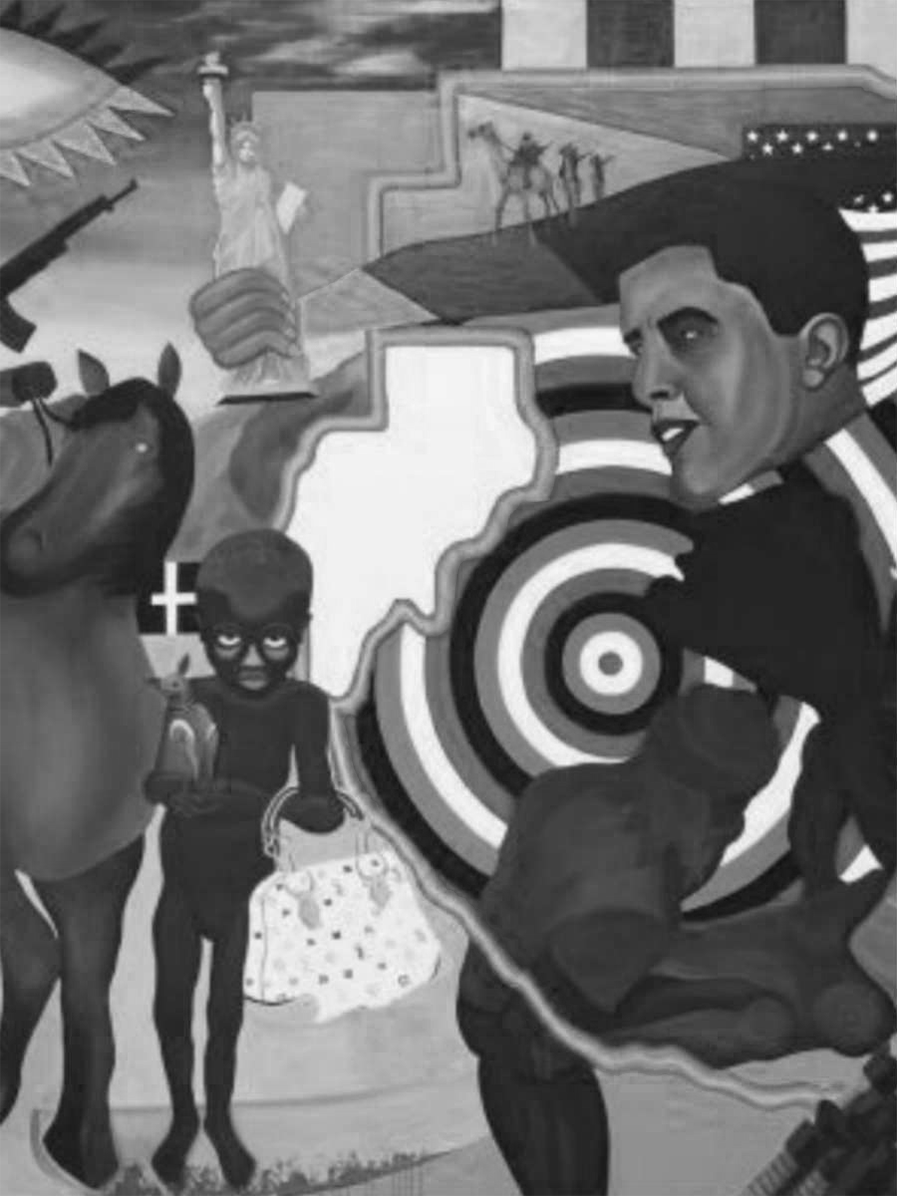
Nadia Plesner created a painting depicting a starving black boy holding a small dog and a bag in his hands, similar to the Paris Hilton style, with a design similar to the Louis Vuitton bags. Later, this painting was included in a larger artwork titled "Darfur". Both works are intended to condemn the indifference of developed countries to the conflict in Darfur, and especially the fact that the media pays a lot of attention to fashion trends and social life instead of focusing on the issues that Nadia Plesner believes are truly important.
The print on the bag depicted by Nadia Plesner is a registered industrial design by Louis Vuitton. The violation of the industrial design right was the basis for the lawsuit filed in the French court in 2008, when T-shirts and posters featuring the "starving boy" were sold, and the lawsuit filed in the Dutch court in 2011, after the world saw the painting "Darfur".
In 2008, in a French court, Louis Vuitton was able to obtain an injunction, and Nadia Plesner stopped offering for sale T-shirts and posters. However, in 2011, a Dutch court sided with the artist and stated that the bag in Nadia Plesner's painting, which clearly resembles a Louis Vuitton bag, is depicted as a symbol of wealth and luxury due to its high price and serves to convey the artist's creative message. The court decided that Nadia Plesner's right to freedom of creativity and the right to freedom of speech were more important than Louis Vuitton's exclusive right to an industrial design.
The court sided with the artist despite the fact that the use of the intellectual property in the artwork was commercial — T-shirts and posters with a starving boy were sold on the artist's website (however, it was stated that all the funds raised from the sale would be used for charitable purposes), and the amount earned from the sale of the painting "Darfur" exceeded $45,000.
It is clear that Louis Vuitton initiated the legal proceedings because it was dissatisfied with the way his products were being portrayed as being purchased by cynical and indifferent individuals, and he did not want the fashion house to be associated in any way with the genocide in Darfur, to which it had no connection. Louis Vuitton likely chose to protect his intellectual property rights as it believed that this would be the easiest way to stop the artist's actions. However, this strategy proved to be a losing one.
Let's try to figure out what measures a fashion house in a similar situation can take to protect its interests in Russia.
Russian Perspective
Let's assume that a similar situation occurred in Russia. What are the chances for the parties, and what strategy can they choose to protect their interests? Let's consider five possible strategies: (1) a claim for infringement of the exclusive right to a design; (2) a claim for infringement of the exclusive right to a trade mark; (3) a claim for infringement of copyright; (4) unfair competition, and (5) protection of business reputation.
1. Violation of the Right to an Industrial Design
If a company in Russia files a claim for protection of the rights to an industrial design in such a situation, it will most likely fail.
The use of an industrial design in a work of art will not be recognized as the use of an industrial design within the meaning of Article 1358 of the Civil Code of the Russian Federation, and therefore it cannot be recognized as a violation of the exclusive right.
Article 1358 of the Civil Code of the Russian Federation
An industrial design is recognized as being used in a product if the product contains all the essential features of the industrial design or a combination of features that produces the same overall impression on an informed consumer as the patented industrial design, provided that the products have a similar purpose.
2. Infringement of the Trade Mark Right
Let's assume that a company files a lawsuit claiming infringement of the trade mark right (provided that the company is the owner of a trade mark protected in Russia). It seems that the chances of the company's claims being satisfied are also low.
The use of a trade mark in a work of art is unlikely to be considered by the courts as the use of a trade mark within the meaning of Article 1484 of the Civil Code of the Russian Federation due to the lack of similarity of the goods, even if the court considers such use to be commercial.
Paragraph 3 of Article 1484 of the Civil Code of the Russian Federation (CC RF)
No one shall use, without the right holder's permission, designations similar to his trade mark in relation to goods for the individualization of which the trade mark is registered, or similar goods, if such use will result in the likelihood of confusion.
In addition, the use of a trade mark in a work of art may be considered by the courts as non-commercial use, even if the work of art is subsequently sold or otherwise commercialized. As is known, non-commercial use is not considered to be a violation of trade mark rights (see, for example, the Judgment of the Court of Intellectual Property Rights dated July 22, 2016, in case No. A40-128923/2015).
3. Violation of Copyright
The third option is to file a claim for violation of exclusive copyright rights. The design of a bag or jewelry, as well as a print on fabric or individual intricate elements of clothing, shoes, or accessories, can be considered as objects of copyright.
However, it is important to remember that the defendant may argue that the object cannot be protected by copyright due to the lack of creative effort in its creation. Creative effort is a criterion for the protectability of an object of copyright, as stated in Article 1257 of the Civil Code of the Russian Federation.
Article 1257 of the Civil Code of the Russian Federation
An author of a work of science, literature, or art is a citizen whose creative effort created the work.
Additionally, the defendant may argue that the derivative work is a parody, which means that the use of the original work falls under the category of free use.
Paragraph 4 of Article 1274 of the Civil Code of the Russian Federation
The creation of a work in the genre of literary, musical or other parody or in the genre of caricature based on another (original) lawfully published work and the use of these parodies or caricatures are allowed without the consent of the author or other holder of the exclusive right to the original work and without payment to him of remuneration.
The judicial practice on the issue of the protectability of designer wardrobe items and their parts, as well as on the permissible scope, method, and artistic form of using an original work to create a parody, has not yet been established, which complicates the lives of both the plaintiff who has chosen this strategy and the defendant.
4. Unfair Competition
It is possible to follow the path of proving the commission of an act of unfair competition. However, it should be noted that a company that produces goods and an artist who creates a work of art are not direct competitors under the Law on Protection of Competition, and in most cases, a competitive relationship between the plaintiff and the defendant is a necessary condition for cases of unfair competition.
However, it should be noted that the Federal Antimonopoly Service and the courts have recently interpreted the concept of unfair competition in an expansive manner.
Scientific and Practical Commentary on the Federal Law on Protection of Competition (2nd Edition, Statut, 2016)
In the case of the concept of parasitism (Article 14.8), the applicant whose reputation is being misused is not a competitor of the business entity engaged in unfair competition. In this case, the potential harm to bona fide business entities operating in the same product market as the infringer is taken into account.
This may sound exotic, but in the case of the Louis Vuitton bag, it is possible to argue that the artist intentionally depicted a well-known bag to consumers, unfairly benefiting from the established reputation of another company and its products (parasitism). Even if the bag was depicted as a symbol of wealth and luxury, which is necessary for the artist's creative expression, it is important to consider that the reputation of a product as a premium item is built upon the hard work of the manufacturing company. Building such a reputation requires significant time and financial resources. Accordingly, the use of such an established reputation for one's own purposes may be considered as unscrupulous behavior.
5. Protection of Business Reputation
Another possible option is to file a lawsuit in court to protect the business reputation of the company. As a general rule, a citizen has the right to demand the refutation of information that discredits his honor, dignity, or business reputation, unless the person who disseminated the information proves that it is true.
An analysis of the scant judicial practice shows that attempts to prove in court that the company's business reputation was damaged by the negative mention of its products in the work were unsuccessful. In one case, the court stated:
"The plot of a television series is not a statement of facts that can be verified, but rather a fictional creation of the series' creators. A television series is a fictional film, and as such, it is assumed that all characters and events are fictional and not based on reality, unlike documentary films. When showing television series, it is assumed that the average viewer has a sufficient level of common sense to assess the authenticity of the actions and events shown to him, to understand whether these events are taking place in reality or whether this is a feature film with a fictional plot".
(Decision of the Arbitration Court of the City of Moscow dated January 28, 2014 in case no. A40-67997/13. This decision was upheld by the decision of the Ninth Arbitration Court of Appeal dated April 30, 2014 No. 09AP-12120/2014-CC).
This argument may be relevant not only in relation to feature films, but also to other works of art that are not of a documentary nature. If this approach is adopted by the courts, then no matter how offensive or provocative the brand's mention in the work may be, there will be almost no chance of the case being resolved in favor of the plaintiff if this strategy is chosen.
Conclusion
Louis Vuitton, in its dispute with Nadia Plesner, pointed out that the artist could have revealed her intention without mentioning the fashion house's products. Indeed, gold, precious stones, and furs have always been symbols of luxury. It turns out that the artist still has the tools to reveal their creative intentions (although it is possible that the intention was to satirize the "brand chase").
However, it seems that in a situation where a company is actually suffering losses due to the negative portrayal of its products in a work of art, and the artist is acting in a highly unethical manner, there is a chance to defend their interests in court or an antitrust agency. In such cases, proving the commission of an act of unfair competition appears to be the most likely strategy, although the final choice of the appropriate method of defense depends on the specific circumstances of the case.
Despite the fact that various fashion houses' products are often mentioned in works of art in a highly unfavorable light, they are hesitant to take legal action against the artists. This could be due to their belief that any publicity is good publicity, or it could be a result of their uncertainty about the outcome and their reluctance to engage in a losing battle. We will try to understand why companies often prefer to accept negative references to their products in works of art instead of defending their interests in court.
The Plesner v. Louis Vuitton Case
A notable example of how a fashion house's products mentioned in an artwork became the subject of a dispute is the conflict between Dutch-Danish artist Nadia Plesner and Louis Vuitton (the Plesner v. Louis Vuitton case, 2011).
Nadia Plesner created a painting depicting a starving black boy holding a small dog and a bag in his hands, similar to the Paris Hilton style, with a design similar to the Louis Vuitton bags. Later, this painting was included in a larger artwork titled "Darfur". Both works are intended to condemn the indifference of developed countries to the conflict in Darfur, and especially the fact that the media pays a lot of attention to fashion trends and social life instead of focusing on the issues that Nadia Plesner believes are truly important.
The print on the bag depicted by Nadia Plesner is a registered industrial design by Louis Vuitton. The violation of the industrial design right was the basis for the lawsuit filed in the French court in 2008, when T-shirts and posters featuring the "starving boy" were sold, and the lawsuit filed in the Dutch court in 2011, after the world saw the painting "Darfur".
In 2008, in a French court, Louis Vuitton was able to obtain an injunction, and Nadia Plesner stopped offering for sale T-shirts and posters. However, in 2011, a Dutch court sided with the artist and stated that the bag in Nadia Plesner's painting, which clearly resembles a Louis Vuitton bag, is depicted as a symbol of wealth and luxury due to its high price and serves to convey the artist's creative message. The court decided that Nadia Plesner's right to freedom of creativity and the right to freedom of speech were more important than Louis Vuitton's exclusive right to an industrial design.
The court sided with the artist despite the fact that the use of the intellectual property in the artwork was commercial — T-shirts and posters with a starving boy were sold on the artist's website (however, it was stated that all the funds raised from the sale would be used for charitable purposes), and the amount earned from the sale of the painting "Darfur" exceeded $45,000.
It is clear that Louis Vuitton initiated the legal proceedings because it was dissatisfied with the way his products were being portrayed as being purchased by cynical and indifferent individuals, and he did not want the fashion house to be associated in any way with the genocide in Darfur, to which it had no connection. Louis Vuitton likely chose to protect his intellectual property rights as it believed that this would be the easiest way to stop the artist's actions. However, this strategy proved to be a losing one.
Let's try to figure out what measures a fashion house in a similar situation can take to protect its interests in Russia.
Russian Perspective
Let's assume that a similar situation occurred in Russia. What are the chances for the parties, and what strategy can they choose to protect their interests? Let's consider five possible strategies: (1) a claim for infringement of the exclusive right to a design; (2) a claim for infringement of the exclusive right to a trade mark; (3) a claim for infringement of copyright; (4) unfair competition, and (5) protection of business reputation.
1. Violation of the Right to an Industrial Design
If a company in Russia files a claim for protection of the rights to an industrial design in such a situation, it will most likely fail.
The use of an industrial design in a work of art will not be recognized as the use of an industrial design within the meaning of Article 1358 of the Civil Code of the Russian Federation, and therefore it cannot be recognized as a violation of the exclusive right.
Article 1358 of the Civil Code of the Russian Federation
An industrial design is recognized as being used in a product if the product contains all the essential features of the industrial design or a combination of features that produces the same overall impression on an informed consumer as the patented industrial design, provided that the products have a similar purpose.
2. Infringement of the Trade Mark Right
Let's assume that a company files a lawsuit claiming infringement of the trade mark right (provided that the company is the owner of a trade mark protected in Russia). It seems that the chances of the company's claims being satisfied are also low.
The use of a trade mark in a work of art is unlikely to be considered by the courts as the use of a trade mark within the meaning of Article 1484 of the Civil Code of the Russian Federation due to the lack of similarity of the goods, even if the court considers such use to be commercial.
Paragraph 3 of Article 1484 of the Civil Code of the Russian Federation (CC RF)
No one shall use, without the right holder's permission, designations similar to his trade mark in relation to goods for the individualization of which the trade mark is registered, or similar goods, if such use will result in the likelihood of confusion.
In addition, the use of a trade mark in a work of art may be considered by the courts as non-commercial use, even if the work of art is subsequently sold or otherwise commercialized. As is known, non-commercial use is not considered to be a violation of trade mark rights (see, for example, the Judgment of the Court of Intellectual Property Rights dated July 22, 2016, in case No. A40-128923/2015).
3. Violation of Copyright
The third option is to file a claim for violation of exclusive copyright rights. The design of a bag or jewelry, as well as a print on fabric or individual intricate elements of clothing, shoes, or accessories, can be considered as objects of copyright.
However, it is important to remember that the defendant may argue that the object cannot be protected by copyright due to the lack of creative effort in its creation. Creative effort is a criterion for the protectability of an object of copyright, as stated in Article 1257 of the Civil Code of the Russian Federation.
Article 1257 of the Civil Code of the Russian Federation
An author of a work of science, literature, or art is a citizen whose creative effort created the work.
Additionally, the defendant may argue that the derivative work is a parody, which means that the use of the original work falls under the category of free use.
Paragraph 4 of Article 1274 of the Civil Code of the Russian Federation
The creation of a work in the genre of literary, musical or other parody or in the genre of caricature based on another (original) lawfully published work and the use of these parodies or caricatures are allowed without the consent of the author or other holder of the exclusive right to the original work and without payment to him of remuneration.
The judicial practice on the issue of the protectability of designer wardrobe items and their parts, as well as on the permissible scope, method, and artistic form of using an original work to create a parody, has not yet been established, which complicates the lives of both the plaintiff who has chosen this strategy and the defendant.
4. Unfair Competition
It is possible to follow the path of proving the commission of an act of unfair competition. However, it should be noted that a company that produces goods and an artist who creates a work of art are not direct competitors under the Law on Protection of Competition, and in most cases, a competitive relationship between the plaintiff and the defendant is a necessary condition for cases of unfair competition.
However, it should be noted that the Federal Antimonopoly Service and the courts have recently interpreted the concept of unfair competition in an expansive manner.
Scientific and Practical Commentary on the Federal Law on Protection of Competition (2nd Edition, Statut, 2016)
In the case of the concept of parasitism (Article 14.8), the applicant whose reputation is being misused is not a competitor of the business entity engaged in unfair competition. In this case, the potential harm to bona fide business entities operating in the same product market as the infringer is taken into account.
This may sound exotic, but in the case of the Louis Vuitton bag, it is possible to argue that the artist intentionally depicted a well-known bag to consumers, unfairly benefiting from the established reputation of another company and its products (parasitism). Even if the bag was depicted as a symbol of wealth and luxury, which is necessary for the artist's creative expression, it is important to consider that the reputation of a product as a premium item is built upon the hard work of the manufacturing company. Building such a reputation requires significant time and financial resources. Accordingly, the use of such an established reputation for one's own purposes may be considered as unscrupulous behavior.
5. Protection of Business Reputation
Another possible option is to file a lawsuit in court to protect the business reputation of the company. As a general rule, a citizen has the right to demand the refutation of information that discredits his honor, dignity, or business reputation, unless the person who disseminated the information proves that it is true.
An analysis of the scant judicial practice shows that attempts to prove in court that the company's business reputation was damaged by the negative mention of its products in the work were unsuccessful. In one case, the court stated:
"The plot of a television series is not a statement of facts that can be verified, but rather a fictional creation of the series' creators. A television series is a fictional film, and as such, it is assumed that all characters and events are fictional and not based on reality, unlike documentary films. When showing television series, it is assumed that the average viewer has a sufficient level of common sense to assess the authenticity of the actions and events shown to him, to understand whether these events are taking place in reality or whether this is a feature film with a fictional plot".
(Decision of the Arbitration Court of the City of Moscow dated January 28, 2014 in case no. A40-67997/13. This decision was upheld by the decision of the Ninth Arbitration Court of Appeal dated April 30, 2014 No. 09AP-12120/2014-CC).
This argument may be relevant not only in relation to feature films, but also to other works of art that are not of a documentary nature. If this approach is adopted by the courts, then no matter how offensive or provocative the brand's mention in the work may be, there will be almost no chance of the case being resolved in favor of the plaintiff if this strategy is chosen.
Conclusion
Louis Vuitton, in its dispute with Nadia Plesner, pointed out that the artist could have revealed her intention without mentioning the fashion house's products. Indeed, gold, precious stones, and furs have always been symbols of luxury. It turns out that the artist still has the tools to reveal their creative intentions (although it is possible that the intention was to satirize the "brand chase").
However, it seems that in a situation where a company is actually suffering losses due to the negative portrayal of its products in a work of art, and the artist is acting in a highly unethical manner, there is a chance to defend their interests in court or an antitrust agency. In such cases, proving the commission of an act of unfair competition appears to be the most likely strategy, although the final choice of the appropriate method of defense depends on the specific circumstances of the case.