
An interview by Alexandra Bakhtiozina with Karina Bogdan, owner and creative force behind the company Sun Stone, about the particularities of the jewelry industry, attempts to protect her designs from copying and imitation, and a lawsuit she lost.
Tell us how it all started, and why jewelry specifically. And why amber!
I was born and raised in Kaliningrad. From childhood I was fascinated by the beauty of amber as a stone, but I was put off by the finished products offered on the jewelry market: all those hedgehog-shaped pieces covered in amber chips, the bead necklaces.
At the time, in Kaliningrad, almost every family had someone who worked with amber. My family was no exception. Thanks to my father, I traveled from childhood to international jewelry exhibitions in America, Hong Kong, Japan, Germany, and Italy. That's when I started collecting jewelry. Some people have a separate wardrobe for clothes — I have one for jewelry.
By age 23 I had a university degree and worked successfully for a while as a lawyer specializing in economic crimes. But my creativity and love of jewelry never went away. I moved to St. Petersburg and increasingly found myself drawn to amber pieces, but I still couldn't find anything stylish and beautiful.
That's when the idea came to me to order a piece made to my own sketch. I wasn't very happy with the execution. But whenever I wore my piece, I got a ton of compliments. That's how the idea for a small collection, inspired by my childhood memories, was born. It took me more than six months to find a manufacturing company. Amber is a very particular stone to work with — you have to account for its fragility and a huge number of nuances in setting it.
In the end, an even crazier idea came to mind — not just to release a collection and open my own store, but to set up my own production facility. My husband supported me in this. He believes in me a great deal and doesn't argue with my crazy ideas — even when I try to complicate our lives by dreaming up new things before we've even made money on the old ones.

What legal difficulties have you encountered along the way as the brand developed?
Our first and biggest pain point is design copying and imitation. When competitors are "inspired" by our collections, that's one thing. It's a completely different matter when someone makes an absolute copy — same proportions, identical down to the last detail.
It's important to understand that it takes a conscientious manufacturer months, sometimes years, to create a new collection — one that carries a piece of the soul, a story, emotions. And then someone just comes along and copies it. They even try to sell it in the very same stores we sent catalogs of our new collection to.
Honestly, at one point we practically turned the market upside down when we appeared with our jewelry. We saw everything differently, we tried to make things fresh and modern. We created new collections with enormous love, and then, a month later, all the store counters would be flooded with dreadful, poor-quality pieces that looked a lot like ours.
In your view, why does this happen?
Many companies in the jewelry industry run on this business model: copy the original designs of niche brands, and hope that either they won't get caught, or that any damages awarded will be more than covered by the sales revenue. Some retail jewelry chains even ask directly to have counterfeits produced for them.
Developing a design and putting it into production is a huge amount of work and expense. We also provide customer service, do our own photoshoots and advertising, and invest significant resources into all of that. So it's very unpleasant to realize there's a risk that others will profit off your work later — especially if they manage to avoid any accountability for it. Every case like that feels like a blow to me. It's as if a piece of my soul has been stolen and trampled on. And on top of that, so many customers suffer too, buying low-quality goods.
How do you find out that similar pieces are being sold on the market?
It varies. One time we found out completely by accident — we suddenly started getting a wave of complaint claims. Four in one week, when that's just not normal for us.
As soon as I saw them, I even called our production manager and scolded them, suspecting they were making third-rate pieces on the night shift and selling them on the side. That's how similar the pieces in the photos looked to ours. But then we were told where the customers had bought them, and we went to a store in the 585 chain and saw it with our own eyes.
When our "Geometry" collection came out, we sent the new pieces to various wholesalers. One of them was the 585 chain. In the end, they didn't order the pieces — but later, on their shelves, we found pieces made by some company from Kostroma that looked very much like ours.
We know a lot of people who have lost copyright-protection cases in similar situations. Even so, we went to court back then to protect our copyright (case No. А31-11574/2021). For almost two years we tried to prove that the disputed pieces were reworked versions of our designs. As evidence, we presented sketches, the briefs we gave our 3D designer, and confirmation that pieces with our design had been released earlier. But unfortunately, we lost the case. The defendant didn't even really bother proving anything — they simply relied on arguments about parallel/independent creation. Although, in my opinion, even a simple comparative analysis shows that virtually identical collections couldn't possibly have been created independently of one another.
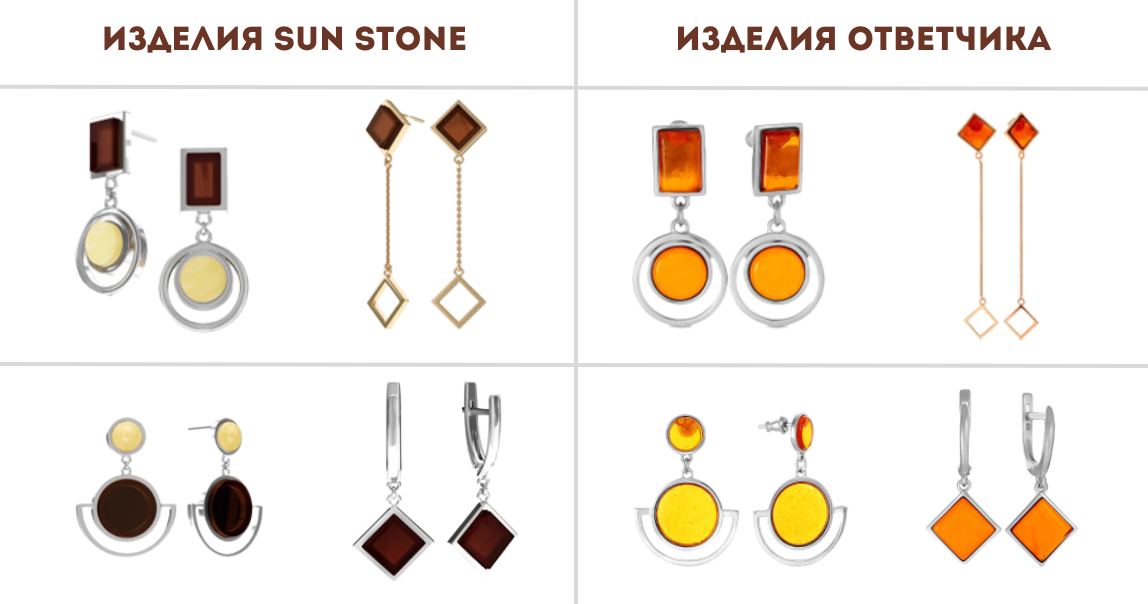
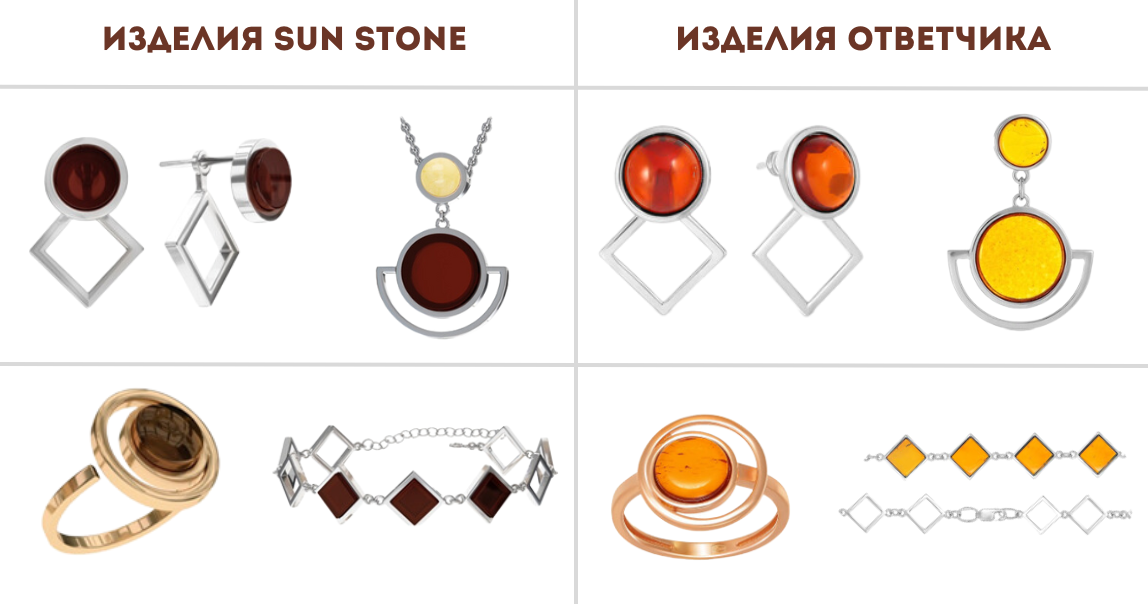
We were very upset at the time. Probably the worst part is that I can no longer enjoy that collection — now it's tied to negative emotions from the lost case. But even worse is that customers came to us who were convinced they'd bought our pieces and were very disappointed. We had to explain to them that it wasn't ours, that we'd been copied.
Do you prepare in advance to protect your rights in case of infringement?
We thought we were prepared. It turned out we weren't. We always try to gather as much evidence as possible at the design-development stage: we keep records of internal correspondence and memos between me and the 3D designer, we pay compensation according to set rules for every piece the designer prepares. We enter pieces into competitions that issue certificates confirming the date a collection was released. But none of that helped us in our dispute.
In Europe, for example, ahead of major exhibitions, organizers publish a catalog of all participants' designs. That provides a certain presumption of who created something first, which can later be useful in court. Besides, the overall culture around this is simply higher in Europe. Here, we often still end up standing at exhibitions side by side with dishonest companies.
Was this the first time something like this happened to you?
Over these two years we've been imitated and copied in various ways, both in Russia and abroad. But something copied on this scale — yes, that was a first. That's why we went to court.
Do you have someone on your team who helps with legal matters?
We're a small jewelry company. We put all our energy and resources into creativity and developing original designs. We have a lawyer who works remotely and helps us with contracts. But when questions came up about protecting intellectual property, we turned to outside consultants.
Does the industry, do competitors, support you in this story?
There's support from friends. But everyone's gotten so used to it, copying has become such a norm in the jewelry industry, that the "support" tends to sound more like: "that's just how it is, hang in there."
What unfair practices exist in the industry that get in the way of honest manufacturers?
Sometimes big federal retail chains approach dishonest manufacturers with an order and ask them to produce a copy of another company's original designs — cheaper, lower quality. We've received offers like that too.
Or they suggest making pieces not out of natural amber but out of pressed or synthetic material, on the assumption that the customer won't know the difference. We've always refused that, even at the cost of potential profit.
Did this whole court experience teach you anything? Will you do things differently now?
Yes — if we run into copying again, I'll try to give it much more publicity. I'll shout about it from the rooftops and cover it in the media, so that, first and foremost, our customers don't fall for a fake like that. We tried to handle it delicately and calmly through the courts, but we lost time and were very disappointed by the ruling.
Does publicity actually help in stories like this? Does the institution of reputation work in Russia?
I don't really believe that the people who produce counterfeits will suddenly develop a conscience. But for a retail chain that sells those counterfeits, it's still a major reputational risk. Personally, as a consumer, if I found out about something like that, I'd start wondering whether the store was deceiving me in other ways too.
If stories about dishonest copying get publicity and public condemnation, I think that could help reduce the amount of counterfeiting to some degree. Unfortunately, though, counterfeits aren't always condemned by consumers either. Not everyone understands, sadly, that developing a design and making quality jewelry is the work of a great many people, whose labor deserves to be rewarded.
What advice would you give to emerging brands?
Honestly, even I don't always know how to protect myself, and I'm someone with a law degree and even work experience in the legal profession.
I'd probably say: invest in building brand recognition. Find your own style and distinctive features, and make sure you get maximum rotation in the media. After that, it's up to the customer to decide for themselves whether they'll chase after mindless, soulless consumption of fakes, or choose a quality, original product made and designed with love for its customers.
What are your plans going forward? Which of your upcoming goals excites you the most?
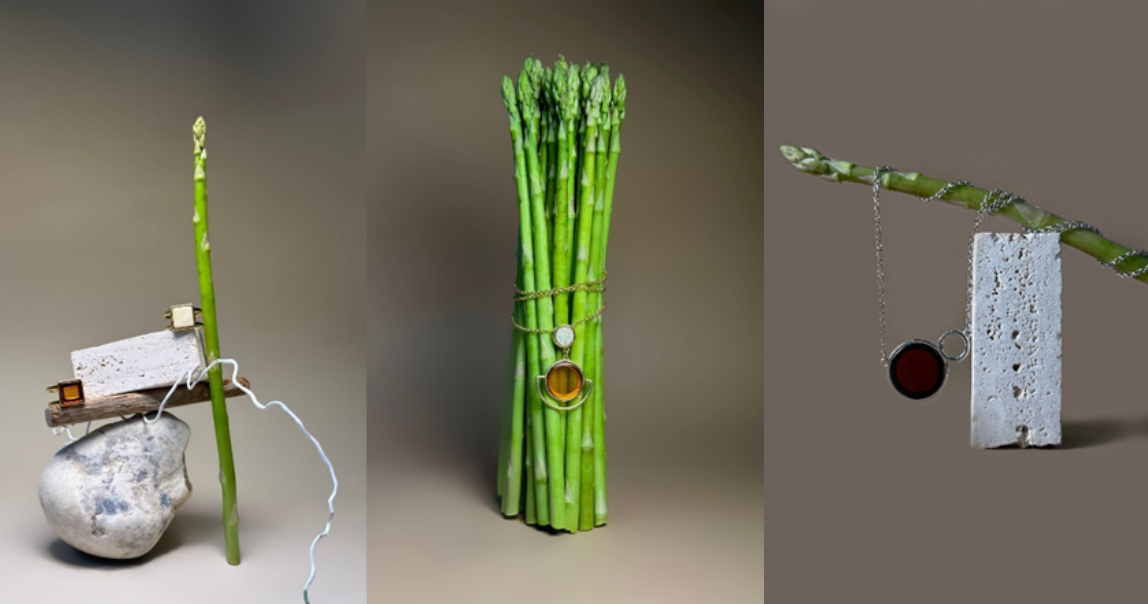
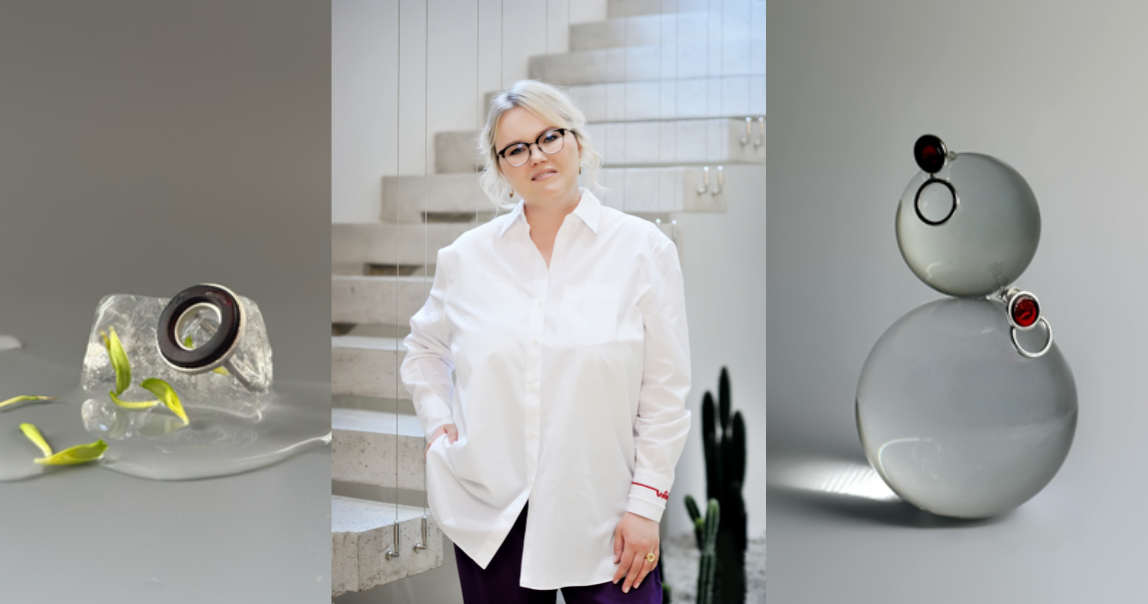
We recently launched a second brand — LAMA. Through it, we're going to try to bring to life a bunch of cool ideas that I couldn't realize within the concept of SUN STONE.
This time we tried to be wiser, and from the very beginning we documented the design-creation process as thoroughly as possible. We got a certificate of participation in a professional exhibition, complete with photos of our pieces and the date. We hope that will help us if a dispute ever comes up again. Because I don't think I could survive another case of copying resolved so unjustly. So much effort goes specifically into developing a unique design. And when you face injustice and an inability to protect your rights, your enthusiasm takes a real hit.