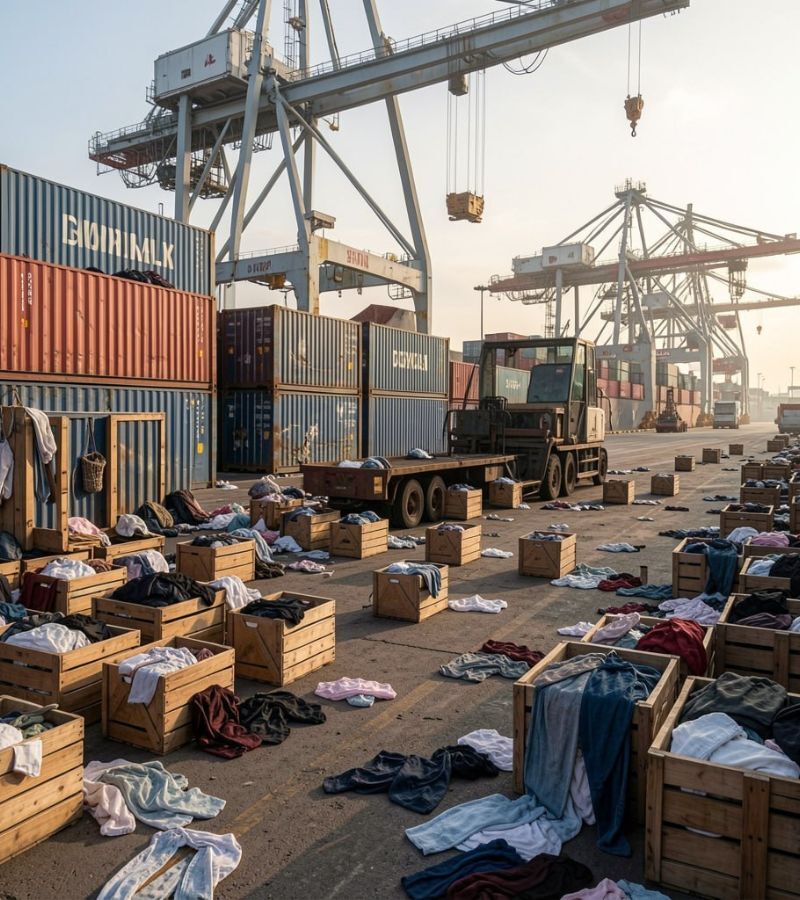
Since late February 2026, against the backdrop of escalating tensions in the Middle East, the risks of disruption to shipping through the Strait of Hormuz — a vital artery of global trade through which up to 20% of the world's oil supplies and a significant share of petrochemical products pass — have increased substantially.
Major ocean carriers, including Maersk, CMA CGM and Hapag-Lloyd, have been forced to reroute vessels around the Cape of Good Hope under these conditions. This adds at least 10–15 days to delivery times and leads to a significant rise in freight costs.
For the fashion industry, however, the key concern is not merely logistics, but above all, dependence on raw materials. A significant share of modern clothing is made from synthetic materials — polyester, nylon, elastane — all of which are derived from petrochemicals.
Consequently, any fluctuations in the oil market, including rises in Brent crude oil prices, have a direct impact on the cost of fabrics, production costs and the overall economics of supply chains.
In these circumstances, the most vulnerable are the manufacturing hubs of South Asia, including Bangladesh, India and Vietnam, where the industry already faces high reliance on imported raw materials and unstable energy supplies. Additional costs arising from extended logistics routes and rising energy prices intensify pressure on production costs, increase the risk of delivery delays and, as a result, create the conditions for large-scale contractual disputes.
For brands, these developments are translating from an operational challenge into a full-fledged legal risk. At the centre of attention are force majeure clauses, the applicability of which in each particular case will depend on the wording of contracts and the governing law, as well as on an assessment of the foreseeability of the relevant events.
At the same time, questions of liability for delay in performance, renegotiation of contractual terms and the allocation of risks among supply chain participants — from raw material suppliers to retailers — are becoming more acute. An additional layer of complexity arises from insurance coverage, which often does not extend to geopolitical risks and consequential losses associated with delays.
According to industry consultants, businesses are already advised to assume a scenario of at least several months of instability. Moreover, in the event of a prolonged crisis, one can expect not only rising prices, but also a structural transformation of logistics routes and contractual practices across the industry.
Thus, events in the energy region extend far beyond the oil market. They directly affect the cost of clothing, the resilience of global supply chains and the legal architecture of relationships within the fashion industry.
Geopolitics, in this case, manifests not abstractly, but quite tangibly — in contracts, in risks, and ultimately in what ends up on the shelves and in consumers' wardrobes.