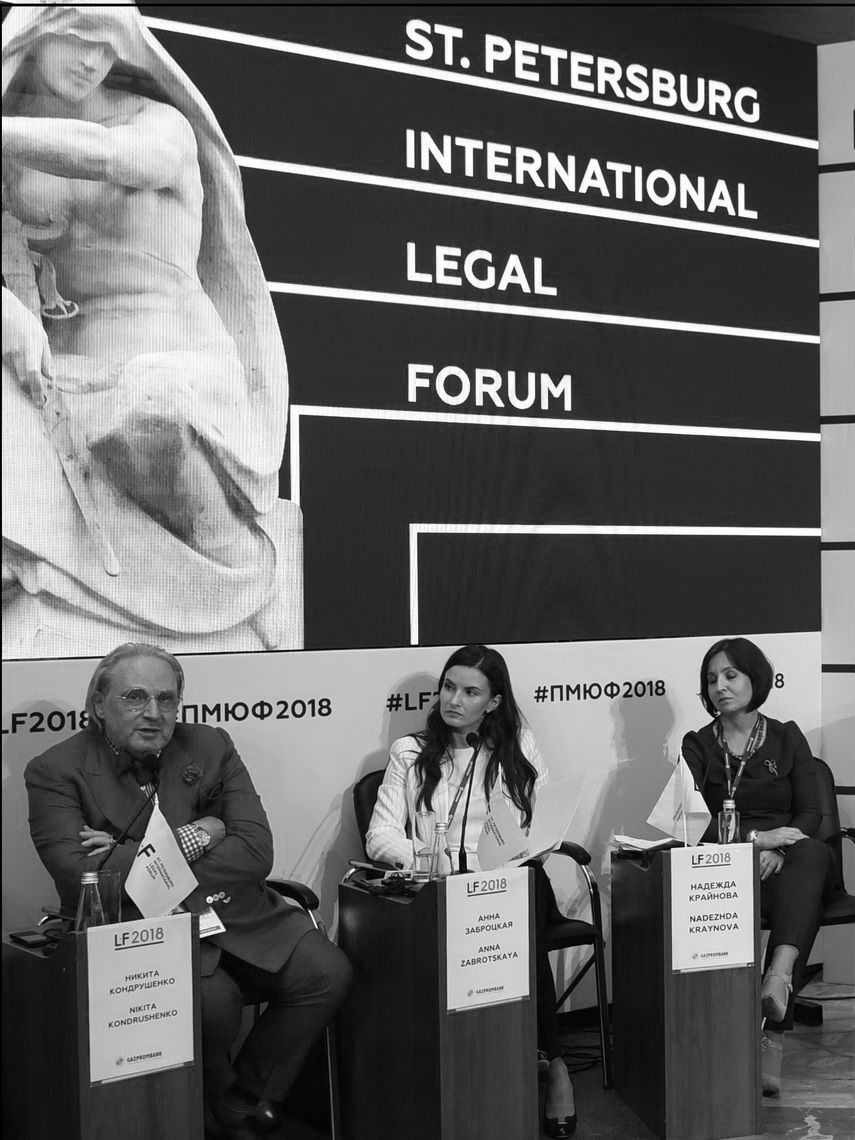
Traditionally, the eighth St. Petersburg International Legal Forum was held in May. This time, it was particularly memorable due to the topic of Fashion Law, which was discussed at the country's main legal platform. Two years ago, when the Fashion Law Russia project was launched and the opening of an independent column in the Legal Insight magazine was planned, this topic was not widely known. However, the legal aspects of the fashion industry are gaining more attention, especially in light of the focus on import substitution and the development of domestic light industry.
The Challenges Faced by the Industry
In order to identify the priority issues of legal regulation in this industry, the St. Petersburg State University of Economics, with the support of the Fashion Law Russia resource, brought together experts from the fields of business, education, and customs, as well as practicing lawyers. The tone of the first part of the discussion was set by the presentations of the industry's leading figures: Nikita Kondrushenko, Chairman of the Supervisory Board of the St. Petersburg Fashion Syndicate and Artistic Director of St. Petersburg Fashion Week; Irina Selyuta, General Director of the Lilia Kiselenko Fashion House; and Alina German, a renowned designer.
Nikita Kondrushenko provided a general overview of the state of the industry, emphasizing that the fashion business in Russia (which is still commonly referred to as "light industry") is in the process of development. While there are all the necessary components in place, there is no well-established industrial chain. While there are many designers in the country, the fashion industry is still in its early stages.
Irina Selyuta and Alina German focused on the challenges that hinder the development and commercialization of the creative potential of Russian designers. These problems include the lack of established cooperation between large-scale and small-scale manufacturers, the lack of independent textile production and customs benefits for the import of finished imported raw materials, as well as the lack of an educational system for training qualified personnel in the fields of weaving, clothing production, etc. According to the designers, solving these problems should have a positive impact on the development of the fashion industry in Russia.
Protection of Fashion Design
While the experts identified a range of systemic industry-specific problems, the legislator was more focused on protecting the work of domestic designers. In this regard, Bill No. 428309-7 "On Amendments to Part Four of the Civil Code of the Russian Federation" was developed to protect the rights of fashion designers. As Nikita Ivanov, Head of the Department of Civil Law at the St. Petersburg State University of Economics, explained in his speech, the initial discussion of the Bill aimed to implement two ideas into the current legislation: providing temporary protection for designs from the moment of filing an application for registration of an industrial design and short-term protection (up to three years) as an industrial design without its corresponding registration under the EU regulation model. However, the draft law submitted to the State Duma for consideration provides for the amendment of Part Four of the Civil Code of the Russian Federation only in relation to the provision of temporary protection until the registration of an industrial design.
This draft law has been extensively criticized not only by prominent legal practitioners, but also by representatives of the design community who have participated in the discussion. They have all come to a consensus that it makes no sense to protect seasonal collections or other short-term designs through the institution of industrial designs. The fashion cycle is so fleeting that it is not practical to spend a year and a half obtaining a patent for a design.
In addition, the current legislation provides for a sufficient number of legal mechanisms that can be used to protect fashion design, such as copyright protection, patent law, and trade mark registration. The task of designers and their legal representatives is to implement these legal protections in practice. However, there is still no clear position among law enforcement agencies regarding the copyright protection of fashion design for clothing, footwear, and accessories.
Counterfeit
In addition to protecting the design from plagiarism, the fashion industry faces quite an acute issue of counterfeiting. The presence of the market of counterfeit products is a global problem. Special attention to this topic was paid by speakers from Italy. According to Petro Sabella, this country is not only the center of production of luxury goods, but also the distribution of their fakes.
In recent years, the Italian fashion industry has shown unprecedented growth rates, which is explained by the phenomenon of globalization and worldwide demand for goods produced by designers from Italy. Nowadays, more than 146 prestigious brands account for 4% of the country's GDP. Maintaining the Italian brand's quality is a challenge for national brands in a highly competitive fashion industry.
The counterfeit market has been thriving in Italy since the 1970s, when organized crime became interested in promoting it due to its immense potential. According to statistics provided by Mario Antinucci, a professor at the University of Rome La Sapienza, the Italian counterfeit goods market amounted to 6 billion euros in 2016.
Combating counterfeiting is a crucial issue for the Italian market. Currently, Italy has an effective law enforcement system in place, allowing for the seizure of goods whose legal origin is uncertain. The production and sale of counterfeit goods are criminal offenses in Italy, punishable by up to four years in prison.
As for Russian practice, Kirill Andreev, Senior Commissioner for Particularly Important Cases at the North-Western Operational Customs, shared the results of the customs' activities in the fight against counterfeit goods, providing statistics on the North-West over the past few years. China remains the undisputed leader in terms of the number of counterfeit goods seized by customs authorities, with fake products accounting for more than half of the total number of seized goods. Among the fashion brands that are most frequently counterfeited and attempted to be smuggled across the border, Chanel and Louis Vuitton are the top choices.
In addition to the statistics on the initiation of administrative proceedings and the prosecution of violators for the import of counterfeit goods, Kirill drew attention to the growing number of individual violators. This is primarily due to the use of a scheme for importing counterfeit goods under the guise of personal use items. Violators transport counterfeit goods across the border in buses within the permissible weight and value limits. According to the customs authorities, a significant challenge in this case is the lack of a universal approach to understanding personal use items within the Eurasian Economic Union. The EAEU does not provide any clarifications on this issue, delegating the regulation in this area directly to the member states of the Union.
Regulation of E-Commerce
The development of online commerce is receiving a lot of attention in the modern world. It is believed that for any fashion brand, including those in the luxury segment, the question of entering the online retail market now begins not with the phrase "should I...", but with the word "how". Online retail knows different models of work, which have their own characteristics: outright model (retailer-seller), marketplace (retailer does not acquire the goods, acts as an agent of the seller, and the seller is a boutique) or drop shipping (retailer — intermediary, advertising platform), etc.
The Head of Legal Affairs in Russia and the CIS of Farfetch UK Limited, Alexey Myagchenkov, was an expert in this area. He noted that one of the pressing issues, especially for online stores operating under the marketplace model, concerns the responsibility of such an online store. Current judicial practice considers marketplace as a seller who must be fully responsible to the buyer, including the quality of the goods. Other issues to pay attention to in online retail are the infringement of the exclusive right (for example, the unauthorized use of photos), brand wars and the controversial issue of the possibility of selling jewelry remotely.
Solidary Liability for the Infringement of the Exclusive Right
Roman Buzko, Co-Founder of the Fashion Law Russia resource and Partner at Buzko & Partners, wittily emphasized in his speech that although the industry discussed by the speakers is referred to as the light industry, the challenges faced by the legal community in this field cannot be described as easy. He illustrated this by highlighting the issue of joint liability for violations of exclusive rights of fashion brands.
The institution of joint liability for violations of exclusive rights was introduced in our legislation only in 2014, which is 30 years later than in the West. Thanks to the solidarity of the infringers, the copyright holder has the opportunity to hold accountable a person who benefits from the violations committed by third parties (an online platform that receives a commission for posting ads offering to sell counterfeit goods, or a carrier whose main business is to deliver counterfeit goods, etc.). The speaker even suggested options for holding accountable the landlord of flea market premises or the buyer who ordered the trade mark to be applied to the product. Currently, there is still no judicial practice on this issue in Russia, so the participants of the discussion could only speculate about the direction it would take.
Based on the above, it can be concluded that, contrary to popular belief, Fashion Law is not limited to intellectual property issues, but rather represents a multifaceted, multidisciplinary practice that encompasses corporate, antitrust, labor, customs, and tax laws, among others. The evolving fashion industry, accelerated production processes, and widespread digitalization will present legal professionals with increasingly complex challenges and generate new topics for expert discussions.
The Challenges Faced by the Industry
In order to identify the priority issues of legal regulation in this industry, the St. Petersburg State University of Economics, with the support of the Fashion Law Russia resource, brought together experts from the fields of business, education, and customs, as well as practicing lawyers. The tone of the first part of the discussion was set by the presentations of the industry's leading figures: Nikita Kondrushenko, Chairman of the Supervisory Board of the St. Petersburg Fashion Syndicate and Artistic Director of St. Petersburg Fashion Week; Irina Selyuta, General Director of the Lilia Kiselenko Fashion House; and Alina German, a renowned designer.
Nikita Kondrushenko provided a general overview of the state of the industry, emphasizing that the fashion business in Russia (which is still commonly referred to as "light industry") is in the process of development. While there are all the necessary components in place, there is no well-established industrial chain. While there are many designers in the country, the fashion industry is still in its early stages.
Irina Selyuta and Alina German focused on the challenges that hinder the development and commercialization of the creative potential of Russian designers. These problems include the lack of established cooperation between large-scale and small-scale manufacturers, the lack of independent textile production and customs benefits for the import of finished imported raw materials, as well as the lack of an educational system for training qualified personnel in the fields of weaving, clothing production, etc. According to the designers, solving these problems should have a positive impact on the development of the fashion industry in Russia.
Protection of Fashion Design
While the experts identified a range of systemic industry-specific problems, the legislator was more focused on protecting the work of domestic designers. In this regard, Bill No. 428309-7 "On Amendments to Part Four of the Civil Code of the Russian Federation" was developed to protect the rights of fashion designers. As Nikita Ivanov, Head of the Department of Civil Law at the St. Petersburg State University of Economics, explained in his speech, the initial discussion of the Bill aimed to implement two ideas into the current legislation: providing temporary protection for designs from the moment of filing an application for registration of an industrial design and short-term protection (up to three years) as an industrial design without its corresponding registration under the EU regulation model. However, the draft law submitted to the State Duma for consideration provides for the amendment of Part Four of the Civil Code of the Russian Federation only in relation to the provision of temporary protection until the registration of an industrial design.
This draft law has been extensively criticized not only by prominent legal practitioners, but also by representatives of the design community who have participated in the discussion. They have all come to a consensus that it makes no sense to protect seasonal collections or other short-term designs through the institution of industrial designs. The fashion cycle is so fleeting that it is not practical to spend a year and a half obtaining a patent for a design.
In addition, the current legislation provides for a sufficient number of legal mechanisms that can be used to protect fashion design, such as copyright protection, patent law, and trade mark registration. The task of designers and their legal representatives is to implement these legal protections in practice. However, there is still no clear position among law enforcement agencies regarding the copyright protection of fashion design for clothing, footwear, and accessories.
Counterfeit
In addition to protecting the design from plagiarism, the fashion industry faces quite an acute issue of counterfeiting. The presence of the market of counterfeit products is a global problem. Special attention to this topic was paid by speakers from Italy. According to Petro Sabella, this country is not only the center of production of luxury goods, but also the distribution of their fakes.
In recent years, the Italian fashion industry has shown unprecedented growth rates, which is explained by the phenomenon of globalization and worldwide demand for goods produced by designers from Italy. Nowadays, more than 146 prestigious brands account for 4% of the country's GDP. Maintaining the Italian brand's quality is a challenge for national brands in a highly competitive fashion industry.
The counterfeit market has been thriving in Italy since the 1970s, when organized crime became interested in promoting it due to its immense potential. According to statistics provided by Mario Antinucci, a professor at the University of Rome La Sapienza, the Italian counterfeit goods market amounted to 6 billion euros in 2016.
Combating counterfeiting is a crucial issue for the Italian market. Currently, Italy has an effective law enforcement system in place, allowing for the seizure of goods whose legal origin is uncertain. The production and sale of counterfeit goods are criminal offenses in Italy, punishable by up to four years in prison.
As for Russian practice, Kirill Andreev, Senior Commissioner for Particularly Important Cases at the North-Western Operational Customs, shared the results of the customs' activities in the fight against counterfeit goods, providing statistics on the North-West over the past few years. China remains the undisputed leader in terms of the number of counterfeit goods seized by customs authorities, with fake products accounting for more than half of the total number of seized goods. Among the fashion brands that are most frequently counterfeited and attempted to be smuggled across the border, Chanel and Louis Vuitton are the top choices.
In addition to the statistics on the initiation of administrative proceedings and the prosecution of violators for the import of counterfeit goods, Kirill drew attention to the growing number of individual violators. This is primarily due to the use of a scheme for importing counterfeit goods under the guise of personal use items. Violators transport counterfeit goods across the border in buses within the permissible weight and value limits. According to the customs authorities, a significant challenge in this case is the lack of a universal approach to understanding personal use items within the Eurasian Economic Union. The EAEU does not provide any clarifications on this issue, delegating the regulation in this area directly to the member states of the Union.
Regulation of E-Commerce
The development of online commerce is receiving a lot of attention in the modern world. It is believed that for any fashion brand, including those in the luxury segment, the question of entering the online retail market now begins not with the phrase "should I...", but with the word "how". Online retail knows different models of work, which have their own characteristics: outright model (retailer-seller), marketplace (retailer does not acquire the goods, acts as an agent of the seller, and the seller is a boutique) or drop shipping (retailer — intermediary, advertising platform), etc.
The Head of Legal Affairs in Russia and the CIS of Farfetch UK Limited, Alexey Myagchenkov, was an expert in this area. He noted that one of the pressing issues, especially for online stores operating under the marketplace model, concerns the responsibility of such an online store. Current judicial practice considers marketplace as a seller who must be fully responsible to the buyer, including the quality of the goods. Other issues to pay attention to in online retail are the infringement of the exclusive right (for example, the unauthorized use of photos), brand wars and the controversial issue of the possibility of selling jewelry remotely.
Solidary Liability for the Infringement of the Exclusive Right
Roman Buzko, Co-Founder of the Fashion Law Russia resource and Partner at Buzko & Partners, wittily emphasized in his speech that although the industry discussed by the speakers is referred to as the light industry, the challenges faced by the legal community in this field cannot be described as easy. He illustrated this by highlighting the issue of joint liability for violations of exclusive rights of fashion brands.
The institution of joint liability for violations of exclusive rights was introduced in our legislation only in 2014, which is 30 years later than in the West. Thanks to the solidarity of the infringers, the copyright holder has the opportunity to hold accountable a person who benefits from the violations committed by third parties (an online platform that receives a commission for posting ads offering to sell counterfeit goods, or a carrier whose main business is to deliver counterfeit goods, etc.). The speaker even suggested options for holding accountable the landlord of flea market premises or the buyer who ordered the trade mark to be applied to the product. Currently, there is still no judicial practice on this issue in Russia, so the participants of the discussion could only speculate about the direction it would take.
Based on the above, it can be concluded that, contrary to popular belief, Fashion Law is not limited to intellectual property issues, but rather represents a multifaceted, multidisciplinary practice that encompasses corporate, antitrust, labor, customs, and tax laws, among others. The evolving fashion industry, accelerated production processes, and widespread digitalization will present legal professionals with increasingly complex challenges and generate new topics for expert discussions.
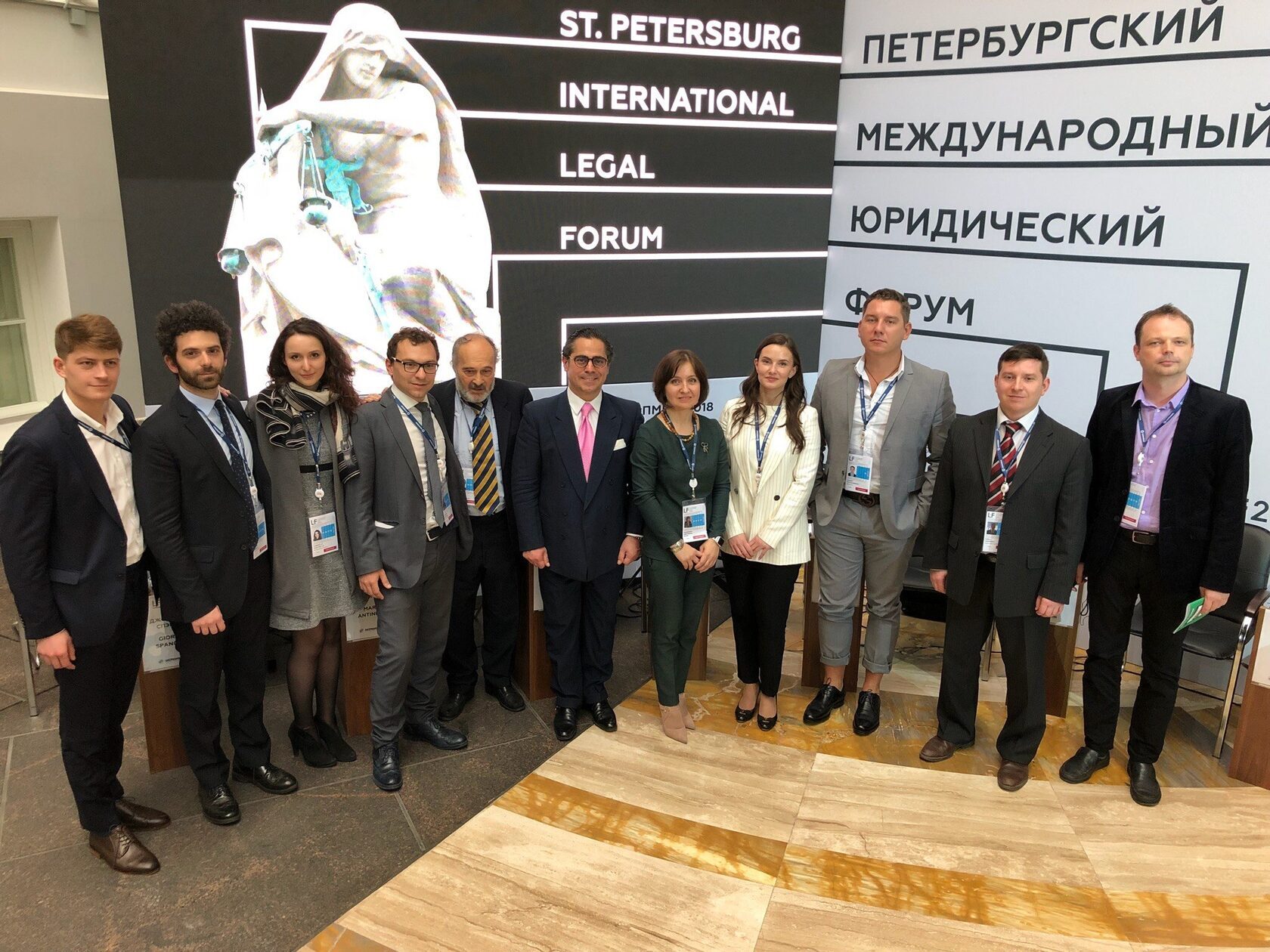
- For example, M. Rozhkova, "This is the current trend in fashion law," or "Is it true that the rights of fashion designers are protected by intellectual property?" // Zakon.ru