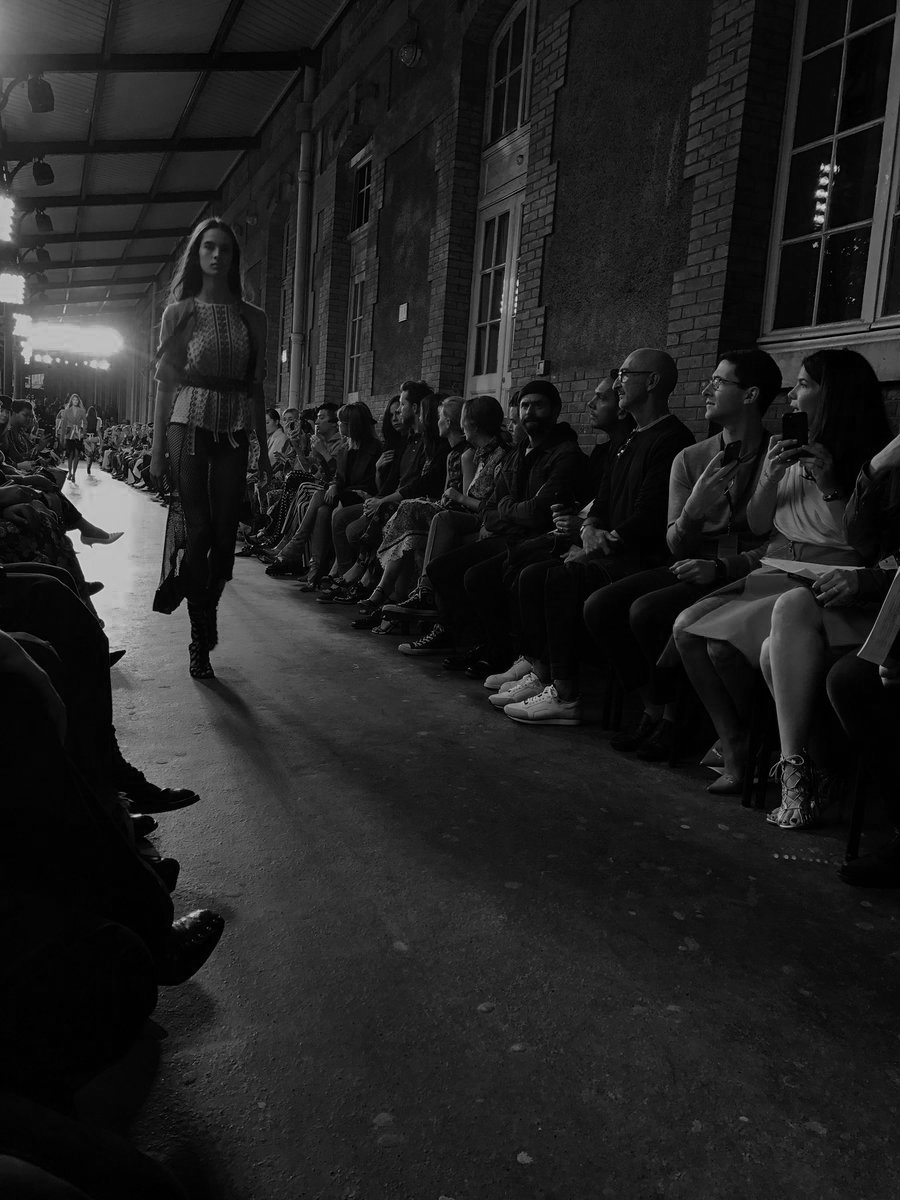
Anna Zabrotskaya, the host of the Fashion Law column and co-head of the Fashion Industry and Luxury Goods practice at Borenius Attorneys Russia ltd, met with leading fashion lawyers from New York and Milan, the capitals of the global fashion industry. Douglas Hand, a partner at HBA Law Firm in the United States, and Ida Palombella, the head of the Italian Intellectual Property and Technology practice at Withers Law Firm, shared their insights on legal consulting in the field of fashion law.

Ida Palombella, Counsel, Withers (Milan)
Leads the IP and Technology practice in Italy. Worked for several years at Valentino, one of the most famous fashion brands. Represented the interests of the Italian Fashion Chamber (Camera Nazionale della Moda Italiana - CNMI) and is a member of its IP Commission.
Leads the IP and Technology practice in Italy. Worked for several years at Valentino, one of the most famous fashion brands. Represented the interests of the Italian Fashion Chamber (Camera Nazionale della Moda Italiana - CNMI) and is a member of its IP Commission.
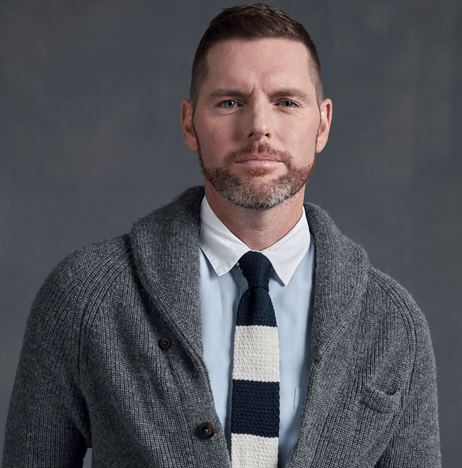
Douglas Hand, Partner, HBA (New York)
One of the most influential fashion law lawyers in the US. Member of the Advisory Committee of the Council of Fashion Designers of America (CFDA). Teaches fashion law at New York Law School and the Cardozo School of Law. Started his career at Shearman & Sterling.
1. Why has the provision of legal services in the fashion industry become a separate practice in law firms?
Douglas Hand: The fashion industry is currently valued at $2 trillion, which is a huge amount! Fashion law encompasses a wide range of legal disciplines. The legal framework for the fashion industry has its own unique characteristics that differ from other sectors of the economy. This includes intellectual property law, corporate finance, labor law, retail space leasing, import/export regulations, and legal proceedings.
Ida Palombella: The law in the fashion industry covers almost all legal areas, but it focuses mainly on current business issues and the knowledge of certain ideas and approaches developed by lawyers for the specific needs of the industry. For example, in Italy, licensing or distribution agreements are not directly regulated by the civil code, but they always include a specific set of terms and conditions that are also relevant to the fashion industry. The same applies to the contractual relationships between designers and fashion brands, as well as the employment contracts between models and store staff.
2. What is special about an M&A deal in the fashion industry, as opposed to such a deal in any other business sector? How does an employment contract with a fashion company differ from other employment contracts?
Douglas Hand: An M&A deal in the fashion industry often involves the acquisition of a large number of intellectual property assets, and in the case of brands led by designers, certain categories of personal non-property rights (which are as transferable as property rights in the United States). This is a complex group of assets to value and, in some cases, to transfer. Accordingly, understanding the fashion business is crucial.
Employment law also has a special application to the regulation of creative workers, where provisions on non-competition and rights to developed designs are particularly important. There are many industries where you can say, "If I lose Tommy Hilfiger, but I still have the Tommy Hilfiger brand, I'll be fine". The fashion business falls into disarray when its creator leaves, but requiring the creator to continue working for the company is akin to slavery. Each such case presents a challenge for a lawyer.
Ida Palombella: When I started working in fashion companies, I realized that it was different from other industries. Understanding the intricacies of the fashion business is crucial for legal practice. For a lawyer who wants to work in the fashion industry, it is very important that someone from the industry can share their "inside perspective" with them, provide some insight and explain how things work in practice. This was one of the reasons why I decided to launch a special course on fashion law in collaboration with the Italian Fashion Council.
3. What are the most common issues you encounter in practice?
Douglas Hand: There is always something new to learn! During the day, I can handle both issues that arise during the early stages of financing a new brand, as well as those related to potential litigation involving another brand, as well as those related to intellectual property protection.
Ida Palombella: Tasks change on a daily basis. In Milan, where I work, there are four Fashion Weeks a year. On the eve of these events, everything is very chaotic: I may be asked to resolve an issue or dispute, draft an agreement, and so on. And all of this must be done very quickly! During the Fashion Week, I spend half of my work time outside the office, attending fashion shows and other events. These are important work moments for me, where I can directly observe my client's work. After the Fashion Week, everything becomes under control and work issues are resolved in a calm manner. We often develop personal relationships with our clients, especially when we work directly with designers. In these cases, in addition to seeking legal advice, they often ask us questions related to common sense or business practices, allowing me to serve as a business consultant.
4. Who are your main clients: designers or major brands?
Douglas Hand: We have a diverse client base, with a higher number of new brands and fashion-tech businesses. The owners of well-known brands, whose income is more than 100 million dollars, are still private companies.
Ida Palombella: We also work with both designers and companies that own fashion brands. Of course, the latter have their own legal departments, and they usually involve us in special projects. On the other hand, smaller companies often ask us to do a lot of routine work, such as drafting licensing and distribution agreements, etc. I also help both novice and well-known designers. In addition, we work with companies that are not directly involved in fashion, but are somehow related to this industry, such as modeling and PR agencies, and now also digital fashion and SMM agencies.
5. Who are your main competitors and, in general, the main players in this market: specialized law firms or practices within them, individual practitioners, or in-house lawyers?
Douglas Hand: I can't remember ever encountering a firm as highly specialized as Hand Baldachin & Amburgey LLP. Large firms often have a few specialists in relevant areas, but not a dedicated practice. Boutique firms, on the other hand, focus on traditional disciplines such as intellectual property, dispute resolution, or tax.
For large brand owners, the majority of legal work is handled by internal departments. They usually hire external consultants to solve non-trivial problems, such as representing them in court and conducting M&A transactions. These companies rarely engage in major disputes, preferring to handle them through their in-house legal departments, or conduct public offerings and mergers and acquisitions on their own. This is where legal firms come in. They don't need to set up policies on websites or collaborate with smaller companies, as they can handle these tasks independently. We do in-house work in cases where the company's brand is not yet well-known enough for it to have in-house lawyers.
Ida Palombella: This is also the case in Italy, but I must say that, surprisingly, there are not many lawyers specializing in the fashion industry. For a long time, there was a tradition in our country of practicing in a specific area of law, such as labor law, intellectual property law, or business law. Over time, there has been a trend towards focusing on specific industries, such as the pharmaceutical industry or the mining industry. I think that in about 10 years, we will have a generation of new lawyers specializing in a wide variety of industries, including the fashion industry.
6. Plagiarism is a well-known problem in fashion. How can a designer protect their copyrights in the United States and Italy?
Douglas Hand: Plagiarism is certainly a problem, but legal doctrine offers various solutions. In the United States, design is protected only by patent law. However, obtaining a patent is not an easy task, especially for clothing, where novelty is rare. Moreover, obtaining a design patent is an expensive endeavor. In the United States, copyright protection is primarily granted to product prints and certain types of jewelry. The most effective intellectual property asset in terms of legal protection is a trade mark but it does not protect the design itself; rather, it protects the brand name.
There is a perception that once a fashion cycle has passed, it is always copied. This allows those who are "on the front lines" and create fashion to reflect on the need to come up with something new. The result is a cycle of consumption that generates trillions of dollars for the industry every year.
Ida Palombella: The protection of design in Italy is very different from the regulation in the United States. If a design is original and has creative value, it can be protected by copyright. There is also the possibility of international, European, or national registration of a design, which requires certain costs before it is clear whether a product is successful on the market. We also have regulations that limit unfair competition and require proof of who was the first to implement a particular idea and how well-known they were before the competitor appeared. Of course, trade mark registration is also important.
7. What do you think about social media pages like Diet Prada?
Douglas Hand: In general, I think it's a good initiative to bring cases of plagiarism to the public's attention and honestly try to establish authorship. With the strict legal framework and the high cost of hiring a qualified advisor, social media offers small brands a practical way to expose plagiarists to public condemnation. This self-defense of rights on the internet has proven effective for several brands and independent designers, albeit without compensation, but with the removal of counterfeit products from sale.
Ida Palombella: Indeed, social media can be used for anything, including fighting counterfeiting and plagiarism. However, the problem is that it can be difficult to determine who copied whom in such cases. I once consulted a designer who claimed to have copied an idea from a former design school classmate. It turned out that both of them had borrowed the idea from an old archive of Gianni Versace. This is a common occurrence in the fashion industry, as it can be challenging to come up with truly original ideas.
8. How often do fashion disputes end up in court? What is the most common way to resolve a dispute?
Douglas Hand: The fashion cycle is incredibly fast-paced, and the legal process in America is very slow, so disputes over design protection often don't make it to court. Either the parties manage to negotiate a resolution, or the owner of the copied brand simply ignores the copy.
Disputes related to licensing agreements, collaborations, investments, or violations of non-competition provisions do make it to court with reasonable frequency. I would say that disputes arising from contractual relations are considered in court as often as disputes involving alternative methods of settlement, such as arbitration.
Ida Palombella: Legal disputes in the fashion industry are not common. Disputes are preferred to be resolved without going to court. For example, a dispute settlement agreement that was reached many years ago as part of a lengthy trade mark infringement lawsuit between Mario Valentino and Valentino is still in force, which, in particular, prevents the latter from placing the word "Valentino" on branded bags.
9. Can you give an example of some high-profile class action lawsuits against a fashion brand?
Douglas Hand: Of course. Over the years, the industry has seen several high-profile spikes in group activity. For example, we can recall a relatively recent dispute about unpaid internships, which is a very common phenomenon in the fashion industry. Such lawsuits usually result in large amounts of compensation. This is because the basis for a class-action lawsuit against an employer is often an unsatisfactory salary and a violation of the permissible working hours.
Another example of a class-action lawsuit in the fashion industry is related to labeling. For example, in California, the "Made in the USA" label is strictly regulated, as is the labeling of information about the amount of potentially hazardous substances. The fact is that all brands are also sold in California and are subject to state laws there and losses due to non-compliance with local requirements can be quite significant.
Ida Palombella: In countries with a continental legal system, class-action lawsuits are not very common. Italy passed special legislation on this matter a few years ago, but its implementation still raises many practical and procedural issues. I am not aware of any high-profile fashion-related cases but such lawsuits have recently been initiated in Italy against several telecommunications and insurance companies.
10. What advice would you give to a fashion brand owner who wants to enter the American or Italian market?
Douglas Hand: I would recommend hiring a competent American lawyer who understands the fashion industry. Otherwise, you may either overpay or not receive the necessary services. It is usually advisable (and often necessary when negotiating contracts) to establish a subsidiary in the United States and pay special attention to planning and structuring your business in the United States to optimize the overall structure of your international group of companies.
Ida Palombella: It is necessary to involve a blogger (influencer) with a strong presence in Italy and present the collection at Milan Fashion Week, in particular at the Women's Fashion Week in September, which is really at the center of the world of fashion. From a legal point of view, of course, it is necessary to register the brand and conclude a profitable agreement with a distributor, so that it is possible to distribute the products in the best stores in the iconic cities of Italy. Of course, it is necessary to take care of intellectual property protection, launch a good website and SMM, moreover, for the Italian market it is very important that everything is in Italian.
One of the most influential fashion law lawyers in the US. Member of the Advisory Committee of the Council of Fashion Designers of America (CFDA). Teaches fashion law at New York Law School and the Cardozo School of Law. Started his career at Shearman & Sterling.
1. Why has the provision of legal services in the fashion industry become a separate practice in law firms?
Douglas Hand: The fashion industry is currently valued at $2 trillion, which is a huge amount! Fashion law encompasses a wide range of legal disciplines. The legal framework for the fashion industry has its own unique characteristics that differ from other sectors of the economy. This includes intellectual property law, corporate finance, labor law, retail space leasing, import/export regulations, and legal proceedings.
Ida Palombella: The law in the fashion industry covers almost all legal areas, but it focuses mainly on current business issues and the knowledge of certain ideas and approaches developed by lawyers for the specific needs of the industry. For example, in Italy, licensing or distribution agreements are not directly regulated by the civil code, but they always include a specific set of terms and conditions that are also relevant to the fashion industry. The same applies to the contractual relationships between designers and fashion brands, as well as the employment contracts between models and store staff.
2. What is special about an M&A deal in the fashion industry, as opposed to such a deal in any other business sector? How does an employment contract with a fashion company differ from other employment contracts?
Douglas Hand: An M&A deal in the fashion industry often involves the acquisition of a large number of intellectual property assets, and in the case of brands led by designers, certain categories of personal non-property rights (which are as transferable as property rights in the United States). This is a complex group of assets to value and, in some cases, to transfer. Accordingly, understanding the fashion business is crucial.
Employment law also has a special application to the regulation of creative workers, where provisions on non-competition and rights to developed designs are particularly important. There are many industries where you can say, "If I lose Tommy Hilfiger, but I still have the Tommy Hilfiger brand, I'll be fine". The fashion business falls into disarray when its creator leaves, but requiring the creator to continue working for the company is akin to slavery. Each such case presents a challenge for a lawyer.
Ida Palombella: When I started working in fashion companies, I realized that it was different from other industries. Understanding the intricacies of the fashion business is crucial for legal practice. For a lawyer who wants to work in the fashion industry, it is very important that someone from the industry can share their "inside perspective" with them, provide some insight and explain how things work in practice. This was one of the reasons why I decided to launch a special course on fashion law in collaboration with the Italian Fashion Council.
3. What are the most common issues you encounter in practice?
Douglas Hand: There is always something new to learn! During the day, I can handle both issues that arise during the early stages of financing a new brand, as well as those related to potential litigation involving another brand, as well as those related to intellectual property protection.
Ida Palombella: Tasks change on a daily basis. In Milan, where I work, there are four Fashion Weeks a year. On the eve of these events, everything is very chaotic: I may be asked to resolve an issue or dispute, draft an agreement, and so on. And all of this must be done very quickly! During the Fashion Week, I spend half of my work time outside the office, attending fashion shows and other events. These are important work moments for me, where I can directly observe my client's work. After the Fashion Week, everything becomes under control and work issues are resolved in a calm manner. We often develop personal relationships with our clients, especially when we work directly with designers. In these cases, in addition to seeking legal advice, they often ask us questions related to common sense or business practices, allowing me to serve as a business consultant.
4. Who are your main clients: designers or major brands?
Douglas Hand: We have a diverse client base, with a higher number of new brands and fashion-tech businesses. The owners of well-known brands, whose income is more than 100 million dollars, are still private companies.
Ida Palombella: We also work with both designers and companies that own fashion brands. Of course, the latter have their own legal departments, and they usually involve us in special projects. On the other hand, smaller companies often ask us to do a lot of routine work, such as drafting licensing and distribution agreements, etc. I also help both novice and well-known designers. In addition, we work with companies that are not directly involved in fashion, but are somehow related to this industry, such as modeling and PR agencies, and now also digital fashion and SMM agencies.
5. Who are your main competitors and, in general, the main players in this market: specialized law firms or practices within them, individual practitioners, or in-house lawyers?
Douglas Hand: I can't remember ever encountering a firm as highly specialized as Hand Baldachin & Amburgey LLP. Large firms often have a few specialists in relevant areas, but not a dedicated practice. Boutique firms, on the other hand, focus on traditional disciplines such as intellectual property, dispute resolution, or tax.
For large brand owners, the majority of legal work is handled by internal departments. They usually hire external consultants to solve non-trivial problems, such as representing them in court and conducting M&A transactions. These companies rarely engage in major disputes, preferring to handle them through their in-house legal departments, or conduct public offerings and mergers and acquisitions on their own. This is where legal firms come in. They don't need to set up policies on websites or collaborate with smaller companies, as they can handle these tasks independently. We do in-house work in cases where the company's brand is not yet well-known enough for it to have in-house lawyers.
Ida Palombella: This is also the case in Italy, but I must say that, surprisingly, there are not many lawyers specializing in the fashion industry. For a long time, there was a tradition in our country of practicing in a specific area of law, such as labor law, intellectual property law, or business law. Over time, there has been a trend towards focusing on specific industries, such as the pharmaceutical industry or the mining industry. I think that in about 10 years, we will have a generation of new lawyers specializing in a wide variety of industries, including the fashion industry.
6. Plagiarism is a well-known problem in fashion. How can a designer protect their copyrights in the United States and Italy?
Douglas Hand: Plagiarism is certainly a problem, but legal doctrine offers various solutions. In the United States, design is protected only by patent law. However, obtaining a patent is not an easy task, especially for clothing, where novelty is rare. Moreover, obtaining a design patent is an expensive endeavor. In the United States, copyright protection is primarily granted to product prints and certain types of jewelry. The most effective intellectual property asset in terms of legal protection is a trade mark but it does not protect the design itself; rather, it protects the brand name.
There is a perception that once a fashion cycle has passed, it is always copied. This allows those who are "on the front lines" and create fashion to reflect on the need to come up with something new. The result is a cycle of consumption that generates trillions of dollars for the industry every year.
Ida Palombella: The protection of design in Italy is very different from the regulation in the United States. If a design is original and has creative value, it can be protected by copyright. There is also the possibility of international, European, or national registration of a design, which requires certain costs before it is clear whether a product is successful on the market. We also have regulations that limit unfair competition and require proof of who was the first to implement a particular idea and how well-known they were before the competitor appeared. Of course, trade mark registration is also important.
7. What do you think about social media pages like Diet Prada?
Douglas Hand: In general, I think it's a good initiative to bring cases of plagiarism to the public's attention and honestly try to establish authorship. With the strict legal framework and the high cost of hiring a qualified advisor, social media offers small brands a practical way to expose plagiarists to public condemnation. This self-defense of rights on the internet has proven effective for several brands and independent designers, albeit without compensation, but with the removal of counterfeit products from sale.
Ida Palombella: Indeed, social media can be used for anything, including fighting counterfeiting and plagiarism. However, the problem is that it can be difficult to determine who copied whom in such cases. I once consulted a designer who claimed to have copied an idea from a former design school classmate. It turned out that both of them had borrowed the idea from an old archive of Gianni Versace. This is a common occurrence in the fashion industry, as it can be challenging to come up with truly original ideas.
8. How often do fashion disputes end up in court? What is the most common way to resolve a dispute?
Douglas Hand: The fashion cycle is incredibly fast-paced, and the legal process in America is very slow, so disputes over design protection often don't make it to court. Either the parties manage to negotiate a resolution, or the owner of the copied brand simply ignores the copy.
Disputes related to licensing agreements, collaborations, investments, or violations of non-competition provisions do make it to court with reasonable frequency. I would say that disputes arising from contractual relations are considered in court as often as disputes involving alternative methods of settlement, such as arbitration.
Ida Palombella: Legal disputes in the fashion industry are not common. Disputes are preferred to be resolved without going to court. For example, a dispute settlement agreement that was reached many years ago as part of a lengthy trade mark infringement lawsuit between Mario Valentino and Valentino is still in force, which, in particular, prevents the latter from placing the word "Valentino" on branded bags.
9. Can you give an example of some high-profile class action lawsuits against a fashion brand?
Douglas Hand: Of course. Over the years, the industry has seen several high-profile spikes in group activity. For example, we can recall a relatively recent dispute about unpaid internships, which is a very common phenomenon in the fashion industry. Such lawsuits usually result in large amounts of compensation. This is because the basis for a class-action lawsuit against an employer is often an unsatisfactory salary and a violation of the permissible working hours.
Another example of a class-action lawsuit in the fashion industry is related to labeling. For example, in California, the "Made in the USA" label is strictly regulated, as is the labeling of information about the amount of potentially hazardous substances. The fact is that all brands are also sold in California and are subject to state laws there and losses due to non-compliance with local requirements can be quite significant.
Ida Palombella: In countries with a continental legal system, class-action lawsuits are not very common. Italy passed special legislation on this matter a few years ago, but its implementation still raises many practical and procedural issues. I am not aware of any high-profile fashion-related cases but such lawsuits have recently been initiated in Italy against several telecommunications and insurance companies.
10. What advice would you give to a fashion brand owner who wants to enter the American or Italian market?
Douglas Hand: I would recommend hiring a competent American lawyer who understands the fashion industry. Otherwise, you may either overpay or not receive the necessary services. It is usually advisable (and often necessary when negotiating contracts) to establish a subsidiary in the United States and pay special attention to planning and structuring your business in the United States to optimize the overall structure of your international group of companies.
Ida Palombella: It is necessary to involve a blogger (influencer) with a strong presence in Italy and present the collection at Milan Fashion Week, in particular at the Women's Fashion Week in September, which is really at the center of the world of fashion. From a legal point of view, of course, it is necessary to register the brand and conclude a profitable agreement with a distributor, so that it is possible to distribute the products in the best stores in the iconic cities of Italy. Of course, it is necessary to take care of intellectual property protection, launch a good website and SMM, moreover, for the Italian market it is very important that everything is in Italian.
The interview was published in the Legal Insight magazine No. 3 (69) 2018 // www.legalinsight.ru