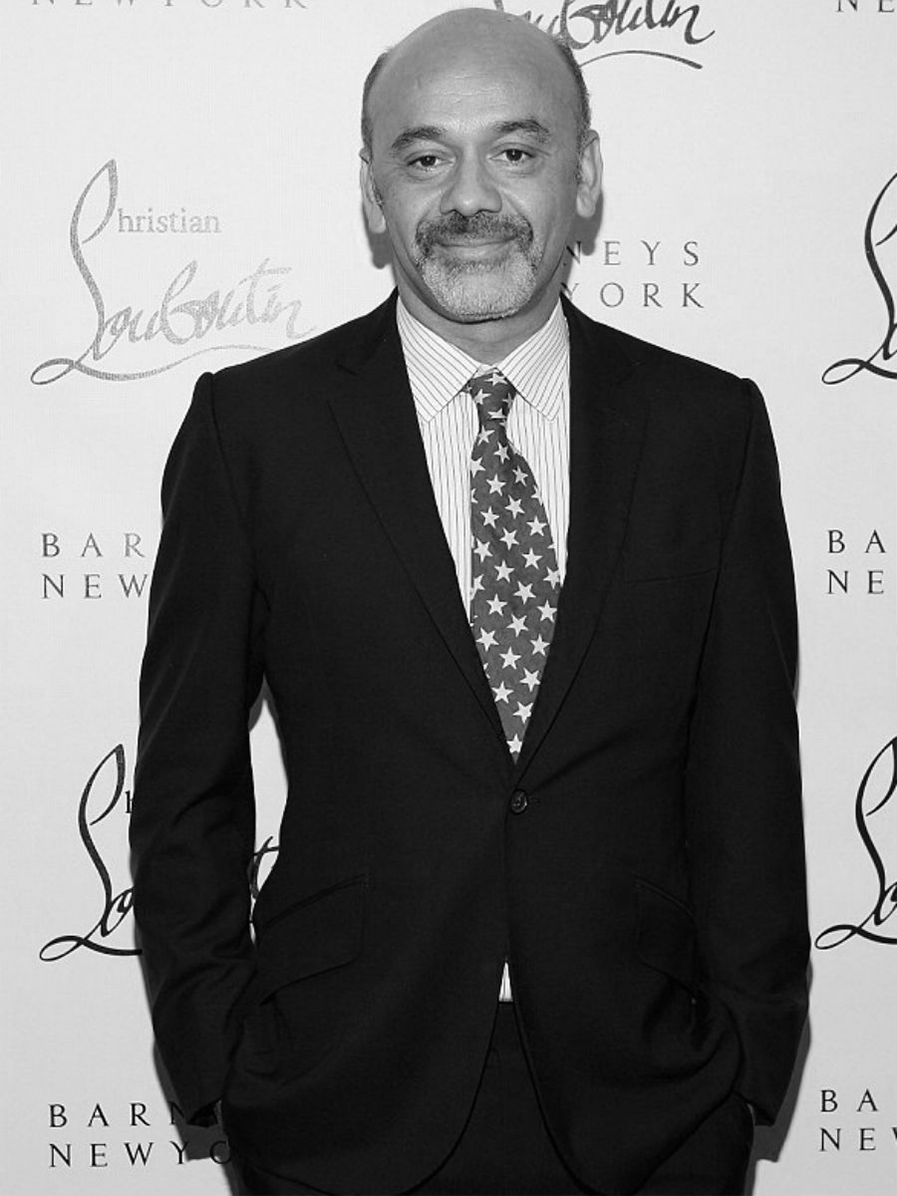
It is not often that Christian Louboutin files a lawsuit with the Moscow Arbitration Court. However, this is exactly what happened in mid-2016, when the renowned French designer filed a lawsuit to protect his exclusive trade mark rights against a number of Russian companies. These companies were involved in the import and sale of perfume products in Russia with a design that was similar to the famous trade mark. The total amount of compensation recovered from the four defendants was nearly 25 million rubles.
This trial is hardly unique from a legal point of view, however, this case well illustrates the relevance of intellectual property for the fashion industry, as we have written earlier, and in this regard is textbook.
Facts of the Case
Christian Louboutin is the owner of exclusive rights to a number of trade marks in relation to goods of class 03 of the MKTU, including perfume and cosmetic products. Christian Louboutin S.A.S. is the exclusive licensee authorized to use these trade marks in many countries around the world, including Russia. Hereinafter collectively referred to as the plaintiffs.
The claimants discovered that in Russia, perfumes marked with the designation "Maison Louboutin" in three types — Le Beige, Le Rouge, Le Violet — were being introduced into civil circulation (import, offer for sale, sale, and advertising). At the same time, these products were sold both wholesale directly from one of the defendants, and retail in large retail chains.
Without waiting too long, the plaintiffs began to prepare their evidence base, as it is well known that a plaintiff in an exclusive rights case must be prepared to prove two interrelated facts in court: (1) the fact that the plaintiff owns the exclusive right; and (2) the fact of infringement, i.e., the fact that the exclusive right is being used by another person without the plaintiff's permission. At this stage, the main objective was to identify potential defendants and document the fact of infringement.
"Test Purchase" and Website Inspection as a Way To Document the Infringement of Exclusive Rights
In order to identify the defendants and establish the ownership of the counterfeit goods, the plaintiffs turned to a notary, who, as part of the procedure for securing evidence, acquired the disputed goods and conducted an inspection of the websites where the products were displayed.
The names of the defendants were included in the accompanying documents (the delivery contract and the goods receipt) or were indicated on the websites themselves. The ownership of the websites themselves (www.interluxparfum.ru, http://imageparfum.ru/ — currently unavailable) was established through legal requests to the domain name registrars. It is interesting that the specified domains were owned by individuals who were not named as defendants.
The court found the evidence presented sufficient to establish that the individuals named as defendants had used the disputed designation. The next step was to prove the similarity between the disputed designation and the trade marks owned by Christian Louboutin.
The Question of Similarity to the Point of Confusion Is a Matter of Fact.
The court reminded the parties that the issue of the similarity of the disputed designations to the point of confusion is a matter of fact and, as a general rule, can be resolved by the court without the need for an expert opinion (Information Letter No. 122 of the Presidium of the Supreme Arbitration Court of the Russian Federation dated December 13, 2007). Based on the rules for registering trade marks, the court easily concluded that:
"the sound (phonetic) similarity of the designation "Maison Louboutin", which is used to label the disputed product, to the plaintiff's trade marks is obvious and beyond doubt, as the word element "Louboutin" in the designation "Maison Louboutin" is identical in sound to the word element "Louboutin" in the plaintiff's trade marks.
[...] From the point of view of semantic meaning, the first verbal element "Maison" is a common noun in the French language and, translated into Russian, means "house, trading house, or firm". [...] Since LOUBOUTIN is the surname of the claimant (the designer and founder of the fashion house of the same name), the phrase "Maison Louboutin" is perceived as the name of the Christian Louboutin fashion house and is associated with all three of the claimant's trade marks".
Based on the above, the court recognized the designation "Maison Louboutin", which is marked on the disputed product, as similar to the trademarks of Christian Louboutin to the point of confusion.
The Defendants Argued That They Were Not at Fault, but Their Aarguments Were Unsuccessful.
The defendants provided several arguments to justify their innocence. One of the defendants claimed that the imported products had undergone proper customs clearance, and therefore they should not be held responsible. Another defendant argued that they had no control over the origin of the goods they purchased from Russian legal entities.
Rejecting both arguments, the court reminded that the burden of proof of the absence of guilt lies with the defendant:
"from the said provisions it follows that the person being held civilly liable for the infringement of intellectual rights must prove the absence of his guilt, the adoption of all measures for the proper performance of the duty or the existence of extraordinary and unavoidable circumstances that caused its non-performance (in this case, the admission of the infringement of the exclusive right to a trade mark belonging to another person)".
Losses or Compensation for the Infringement of Exclusive Rights
As a general rule, the rightholder whose exclusive rights to use a trade mark have been violated has the right to claim damages. However, since it can be difficult to prove the amount of damages, the Russian legislator has provided for a special option:
Paragraph 4 of Article 1515 of the Civil Code of the Russian Federation (CC RF)
The rightholder has the right to choose whether to claim damages or compensation from the infringer:
(1) in the amount of 10,000 to 5,000,000 RUB, determined at the discretion of the court based on the nature of the infringement;
(2) twice the value of the goods on which the trade mark is illegally displayed, or twice the value of the right to use the trade mark, determined based on the price that is usually charged for the legal use of the trade mark under comparable circumstances.
This is the opportunity that the plaintiffs in this case took advantage of and demanded compensation twice the value of the goods on which the trade mark was displayed. In order to obtain this compensation, the plaintiffs needed to know the quantity of the counterfeit goods, as the compensation is calculated based on each individual item. It is worth noting the quickness of the plaintiffs. In the case of one of the defendants, the necessary information was found in the customs declaration submitted by the defendant to the court. In the case of the second defendant, information about their activities was obtained from an online retailer (KupiVip), and the third defendant voluntarily disclosed the number of imported perfumes. However, no information was available about the fourth defendant, so the plaintiffs exercised their right to claim compensation of 500,000 RUB (see Subparagraph 1 of Paragraph 4 of Article 1515 of the Civil Code of the Russian Federation above).
The positions described above were formulated by the court of first instance and were fully confirmed by the court of appeal several months later. This case once again demonstrates that fighting offenders in Russian courts is not such a hopeless endeavor and can bring financial benefits if properly prepared for the case. Christian Louboutin is well aware of this and does not hesitate to defend his rights in court. For example, you can read more about the legal battles over the famous red sole in another publication on this website.
This trial is hardly unique from a legal point of view, however, this case well illustrates the relevance of intellectual property for the fashion industry, as we have written earlier, and in this regard is textbook.
Facts of the Case
Christian Louboutin is the owner of exclusive rights to a number of trade marks in relation to goods of class 03 of the MKTU, including perfume and cosmetic products. Christian Louboutin S.A.S. is the exclusive licensee authorized to use these trade marks in many countries around the world, including Russia. Hereinafter collectively referred to as the plaintiffs.
The claimants discovered that in Russia, perfumes marked with the designation "Maison Louboutin" in three types — Le Beige, Le Rouge, Le Violet — were being introduced into civil circulation (import, offer for sale, sale, and advertising). At the same time, these products were sold both wholesale directly from one of the defendants, and retail in large retail chains.
Without waiting too long, the plaintiffs began to prepare their evidence base, as it is well known that a plaintiff in an exclusive rights case must be prepared to prove two interrelated facts in court: (1) the fact that the plaintiff owns the exclusive right; and (2) the fact of infringement, i.e., the fact that the exclusive right is being used by another person without the plaintiff's permission. At this stage, the main objective was to identify potential defendants and document the fact of infringement.
"Test Purchase" and Website Inspection as a Way To Document the Infringement of Exclusive Rights
In order to identify the defendants and establish the ownership of the counterfeit goods, the plaintiffs turned to a notary, who, as part of the procedure for securing evidence, acquired the disputed goods and conducted an inspection of the websites where the products were displayed.
The names of the defendants were included in the accompanying documents (the delivery contract and the goods receipt) or were indicated on the websites themselves. The ownership of the websites themselves (www.interluxparfum.ru, http://imageparfum.ru/ — currently unavailable) was established through legal requests to the domain name registrars. It is interesting that the specified domains were owned by individuals who were not named as defendants.
The court found the evidence presented sufficient to establish that the individuals named as defendants had used the disputed designation. The next step was to prove the similarity between the disputed designation and the trade marks owned by Christian Louboutin.
The Question of Similarity to the Point of Confusion Is a Matter of Fact.
The court reminded the parties that the issue of the similarity of the disputed designations to the point of confusion is a matter of fact and, as a general rule, can be resolved by the court without the need for an expert opinion (Information Letter No. 122 of the Presidium of the Supreme Arbitration Court of the Russian Federation dated December 13, 2007). Based on the rules for registering trade marks, the court easily concluded that:
"the sound (phonetic) similarity of the designation "Maison Louboutin", which is used to label the disputed product, to the plaintiff's trade marks is obvious and beyond doubt, as the word element "Louboutin" in the designation "Maison Louboutin" is identical in sound to the word element "Louboutin" in the plaintiff's trade marks.
[...] From the point of view of semantic meaning, the first verbal element "Maison" is a common noun in the French language and, translated into Russian, means "house, trading house, or firm". [...] Since LOUBOUTIN is the surname of the claimant (the designer and founder of the fashion house of the same name), the phrase "Maison Louboutin" is perceived as the name of the Christian Louboutin fashion house and is associated with all three of the claimant's trade marks".
Based on the above, the court recognized the designation "Maison Louboutin", which is marked on the disputed product, as similar to the trademarks of Christian Louboutin to the point of confusion.
The Defendants Argued That They Were Not at Fault, but Their Aarguments Were Unsuccessful.
The defendants provided several arguments to justify their innocence. One of the defendants claimed that the imported products had undergone proper customs clearance, and therefore they should not be held responsible. Another defendant argued that they had no control over the origin of the goods they purchased from Russian legal entities.
Rejecting both arguments, the court reminded that the burden of proof of the absence of guilt lies with the defendant:
"from the said provisions it follows that the person being held civilly liable for the infringement of intellectual rights must prove the absence of his guilt, the adoption of all measures for the proper performance of the duty or the existence of extraordinary and unavoidable circumstances that caused its non-performance (in this case, the admission of the infringement of the exclusive right to a trade mark belonging to another person)".
Losses or Compensation for the Infringement of Exclusive Rights
As a general rule, the rightholder whose exclusive rights to use a trade mark have been violated has the right to claim damages. However, since it can be difficult to prove the amount of damages, the Russian legislator has provided for a special option:
Paragraph 4 of Article 1515 of the Civil Code of the Russian Federation (CC RF)
The rightholder has the right to choose whether to claim damages or compensation from the infringer:
(1) in the amount of 10,000 to 5,000,000 RUB, determined at the discretion of the court based on the nature of the infringement;
(2) twice the value of the goods on which the trade mark is illegally displayed, or twice the value of the right to use the trade mark, determined based on the price that is usually charged for the legal use of the trade mark under comparable circumstances.
This is the opportunity that the plaintiffs in this case took advantage of and demanded compensation twice the value of the goods on which the trade mark was displayed. In order to obtain this compensation, the plaintiffs needed to know the quantity of the counterfeit goods, as the compensation is calculated based on each individual item. It is worth noting the quickness of the plaintiffs. In the case of one of the defendants, the necessary information was found in the customs declaration submitted by the defendant to the court. In the case of the second defendant, information about their activities was obtained from an online retailer (KupiVip), and the third defendant voluntarily disclosed the number of imported perfumes. However, no information was available about the fourth defendant, so the plaintiffs exercised their right to claim compensation of 500,000 RUB (see Subparagraph 1 of Paragraph 4 of Article 1515 of the Civil Code of the Russian Federation above).
The positions described above were formulated by the court of first instance and were fully confirmed by the court of appeal several months later. This case once again demonstrates that fighting offenders in Russian courts is not such a hopeless endeavor and can bring financial benefits if properly prepared for the case. Christian Louboutin is well aware of this and does not hesitate to defend his rights in court. For example, you can read more about the legal battles over the famous red sole in another publication on this website.